Retrieval slows before storage does
The memory is usually still there. What changes first is the speed of pulling it back out — which is why a name arrives twenty minutes after the conversation ended.
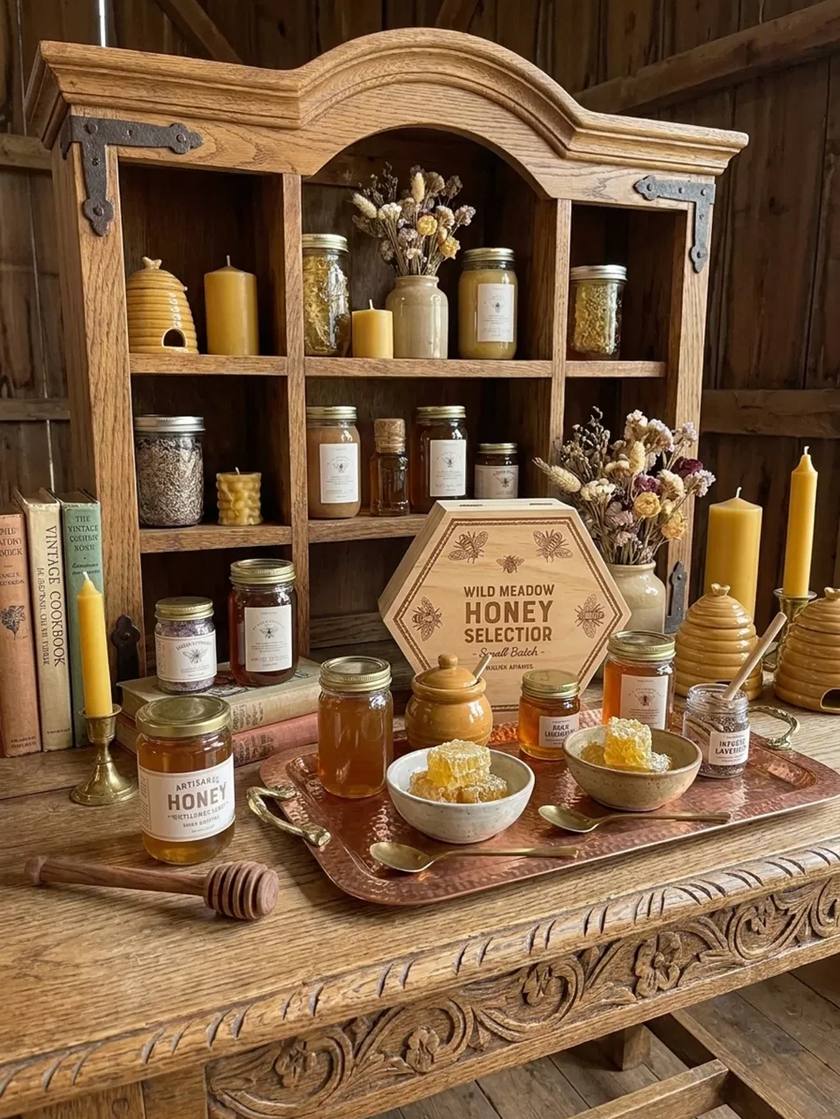
It is not a brain game. It is not a new prescription. It is a small, unhurried habit borrowed from Mediterranean beekeeping households — and a short presentation explains exactly how people are folding it into their evenings.
 Watch the presentation
No sign-up required to watch.
Section One
Recall changing with age is common, and it is rarely one single thing. Four everyday factors come up again and again in the research literature.
The memory is usually still there. What changes first is the speed of pulling it back out — which is why a name arrives twenty minutes after the conversation ended.
Deep sleep tends to shorten with age. Since consolidation happens overnight, a fragmented night often shows up the next day as a foggy morning.
Much of what looks like forgetting was never fully encoded. Phone in hand, television on, three things at once — the detail simply never landed.
Less movement, less routine, simpler meals, fewer new situations. None of it feels dramatic in any single week, and all of it accumulates over a decade.
Section Two
Before the ritual makes sense, it helps to clear out the assumptions that usually come with it.
"Forgetting a name means something serious has started."
Occasional word-finding lapses are extremely common across adulthood and are not, on their own, a diagnosis of anything. What matters is the pattern over time — changes that are persistent, worsening, or interfering with daily tasks are a conversation to have with your doctor, not a page like this one.
"Brain-training apps are the fix."
People do get better at the games they practise. Whether that improvement carries over into remembering where you left the keys is exactly the point researchers keep debating, and the evidence for broad transfer has been mixed at best.
"After a certain age, nothing you do matters."
The adult brain keeps adapting. Sleep, movement, social contact and overall eating patterns are the levers most often studied in older adults — which is a far less exciting answer than a miracle, and a far more useful one.
Section Three
The order matters more than the ingredients. The whole thing takes about ten minutes a night and costs nothing to try.
Pick a fixed point in the evening and treat it as the edge of the day: screens down, lights lowered, kitchen quiet. The consistency is doing the work here, not the exact time on the clock. Households in the tradition this comes from did it by habit rather than by intention — the sun set, the shutters closed, and the evening had a shape.
A single small spoon of raw honey, traditionally paired with a warm infusion of local herbs, eaten sitting down and without a screen in front of you. In the villages where this is still ordinary, nobody hurries this part — it is the pause that marks the end of the working day. That deliberate slowness is why it reads as a ritual rather than a snack.
Before you reach for your phone, spend two minutes recalling three specific things from the previous day: a name, a place, one thing somebody said. Retrieval practice is the oldest memory technique there is, and pairing it with an existing habit is what keeps it from being abandoned by Thursday.
The presentation covers the step-two pairing in detail.
Section Four
Beekeeping in the Mediterranean is old enough that it stopped being a trade and became a household rhythm. Along the coasts and on the islands, small apiaries were kept the way a garden is kept — a few hives behind the house, harvested by hand, jarred without heat, and drawn on all year.
What travelled with those jars was not a recipe. It was a timing. Honey was an evening thing: the last quiet act before bed, often with an infusion of whatever grew nearby, taken sitting down while the house settled. Nobody wrote it down because nobody thought of it as a practice.
Modern interest arrived from a different direction. When researchers began looking at Mediterranean-style eating patterns and how older adults age, the attention landed on the pattern as a whole — the foods, the meal structure, the daily rhythm — rather than any single ingredient. That distinction is easy to lose in a headline and important to keep.
Which is the honest framing for what you have just read: this is a traditional evening habit with a long history and an ongoing research conversation around the broader pattern it belongs to. It is not a treatment, and nothing on this page should be read as one.
The interesting thing about this ritual was never the honey. It was that an entire culture had a fixed, unhurried marker for the end of the day — and that most of us quietly gave ours up somewhere around the arrival of the second screen.
Section Five
These are common experiences, described by readers in their own words. They are not symptoms of anything and they are not a checklist for self-diagnosis.
You walk into the room with real purpose and the purpose stays behind in the hallway.
You know the face, the job, the street they live on. The name shows up during the drive home.
Your eyes finished the page. Very little of it made it any further than that.
Not lost, exactly — just never consciously put down anywhere, which amounts to the same search.
Mornings are sharp. Somewhere after lunch the sharpness quietly clocks out for the day.
Four items to the shop used to be four items. Now it is four items on a note in your pocket.
Please read this part. Occasional moments like these are ordinary at any age. Changes that are persistent, getting worse, or interfering with work, driving, finances or daily routines deserve a proper evaluation from a qualified healthcare professional — not a web page and not a supplement. Nothing here is intended to diagnose any condition.
Section Six
Personal accounts, shared with permission. They describe individual experiences, not typical or expected outcomes.
[ REAL CUSTOMER QUOTE 1 — paste the verified quote here, in the customer's own words, unedited except for length. ]
[ First name, last initial ][ City, State ] · verified purchaser
[ REAL CUSTOMER QUOTE 2 — paste the verified quote here. Keep any claim inside the quote non-therapeutic. ]
[ First name, last initial ][ City, State ] · verified purchaser
[ REAL CUSTOMER QUOTE 3 — paste the verified quote here. Keep the written permission on file. ]
[ First name, last initial ][ City, State ] · verified purchaser
Results disclaimer. The accounts above describe individual experiences. Individual results vary and no result is promised, implied or guaranteed. Testimonials are not evidence of effectiveness and should not be taken as typical.
Section Seven
An evening habit with three parts: a fixed wind-down hour, a small spoonful of raw honey taken slowly with a warm herbal infusion, and two minutes of deliberate recall the next morning. The presentation walks through the pairing used in step two and where it comes from.
No. This page is educational and this ritual is a lifestyle habit. It is not a treatment, a therapy or a substitute for medical care, and it is not intended to diagnose, treat, cure or prevent any disease. If you have concerns about your memory, speak with a qualified healthcare professional.
It runs in your browser and is free to watch. Most people watch it in one sitting; you can pause and come back to it. There is nothing to install and no sign-up required to press play.
Nothing in the three steps requires it. The ritual is built to sit on top of whatever you already eat, because habits that demand a full lifestyle overhaul are the ones that get abandoned first.
That is a question for your doctor or pharmacist, not for us. Bring up anything you plan to add to your routine — including foods, herbs and supplements — with the professional who knows your full history. This applies particularly if you manage blood sugar, are pregnant or nursing, or are scheduled for surgery.
Then you close the tab, having spent nothing. If you later choose to purchase something from the advertiser, the refund terms are set by that retailer and shown at checkout — read them there before you order, since we do not process orders on this page.
Because this page is the editorial half of the story: the background, the tradition and the habit itself, which you can practise without buying anything. The presentation is where the advertiser introduces what they offer. Keeping the two separate is deliberate.
Before you go
Ten minutes, in your browser, free to watch. It covers the part of the ritual that a written page cannot do justice to.
Free to watch · no sign-up · sponsored content
Last updated: 2026
This policy explains what information is collected when you visit this website, how it is used, and the choices available to you. By using this site you agree to the practices described below.
We collect two kinds of information. The first is information you provide voluntarily, such as an email address submitted through a contact form. The second is collected automatically by your browser and includes IP address, browser type and version, device and operating system, referring page, pages viewed, and the date and time of your visit.
This site uses cookies, pixels, tags and similar technologies, including those placed by advertising and analytics partners, to remember preferences, measure traffic and attribute conversions. Most browsers allow you to refuse or delete cookies through their settings. Disabling cookies may affect how parts of the site function.
We work with service providers for hosting, analytics, email delivery and advertising measurement. These providers process information only as needed to deliver their service. This site also links to third-party websites operated by advertisers and retailers. Once you follow such a link, their own privacy policy governs the information they collect, and we have no control over their practices.
Information is retained only as long as needed for the purposes described in this policy or as required by applicable law, after which it is deleted or anonymised.
Depending on where you live, you may have the right to request access to the personal information held about you, request its correction or deletion, object to or restrict certain processing, request a portable copy, and opt out of the sale or sharing of personal information. Requests can be sent through the contact page and will be handled within the timeframe required by applicable law. You will not be discriminated against for exercising these rights.
Browsers may transmit Do Not Track or global opt-out signals. Where required by applicable law, we honour recognised opt-out preference signals.
This site is intended for adults and is not directed to children under 18. We do not knowingly collect personal information from children. If you believe a child has provided information, contact us and it will be deleted.
Reasonable administrative and technical safeguards are used to protect information. No method of transmission or storage over the internet is completely secure, and absolute security cannot be guaranteed.
This policy may be updated from time to time. The revised version takes effect when posted on this page, and the date above will be updated accordingly.
Questions about this policy can be sent through the contact page of this website.
Last updated: 2026
Please read these terms carefully. By accessing or using this website you agree to be bound by them. If you do not agree, do not use the site.
This site is provided for personal, non-commercial and informational use. You agree not to use it unlawfully, not to interfere with its operation or security, not to attempt unauthorised access to any part of it, and not to use automated tools to scrape or copy its content.
All content published here is general information and opinion. It is not medical, legal, financial or professional advice, and no professional relationship is created by reading it. Statements about any product have not been evaluated by the Food and Drug Administration, and no content is intended to diagnose, treat, cure or prevent any disease. Always consult a qualified healthcare professional before acting on anything you read here.
Text, layout, graphics and code on this site are protected by copyright and other intellectual property laws. You may view and print pages for your own personal use. You may not reproduce, republish, distribute, modify or create derivative works from this material without prior written permission. Third-party names and marks that appear are the property of their respective owners and are used for identification only.
This site publishes sponsored content and participates in affiliate programs. We may receive compensation when a visitor clicks a link or completes a purchase. We are not the seller of any product featured by an advertiser and take no part in orders, payments, fulfilment, shipping, returns or customer service, all of which are handled by the retailer under its own terms.
Links to external sites are provided for convenience. We do not control and are not responsible for their content, products, claims or practices, and inclusion of a link is not an endorsement.
The site and its content are provided on an "as is" and "as available" basis without warranties of any kind, express or implied, including any warranty of accuracy, completeness, merchantability, fitness for a particular purpose or non-infringement. We do not warrant that the site will be uninterrupted, timely, secure or error-free.
To the fullest extent permitted by law, neither the site operator nor its contributors shall be liable for any direct, indirect, incidental, consequential, special or punitive damages arising from your use of, or inability to use, this site or anything obtained through it, including decisions made in reliance on its content.
You agree to indemnify and hold harmless the site operator from any claim or demand, including reasonable legal fees, arising out of your use of the site or your breach of these terms.
We may modify, suspend or discontinue any part of the site, and may update these terms at any time. Continued use after changes are posted constitutes acceptance of the revised terms.
These terms are governed by the laws applicable in the operator's jurisdiction, without regard to conflict-of-law rules. If any provision is found unenforceable, the remaining provisions stay in full force.
Questions about these terms can be sent through the contact page of this website.
This website is an advertising and editorial publication. It does not sell products, take orders or process payments, and therefore does not issue refunds.
Any purchase you make is a transaction between you and the retailer whose offer you accepted. Refund eligibility, return windows, restocking terms and the refund method are set by that retailer and published on its own website and order confirmation. Review those terms before you order.
Contact the retailer's customer service using the details on your order confirmation email or receipt, and have your order number ready. Requests submitted to this website cannot be processed and will only delay your request.
Charges on your statement come from the retailer or its payment processor, not from this website. Direct billing questions to them.
No physical or digital goods are sold or shipped from this website.
If you purchase after following a link from this page, your order is fulfilled by the retailer that took the order. Shipping methods, delivery estimates, carriers, tracking, shipping costs, import duties and any delivery guarantees are determined by that retailer and shown at checkout.
For a late, missing or damaged shipment, contact the retailer's customer service directly with your order number. This website has no access to order or tracking systems and cannot look up, alter, expedite or cancel a shipment.
This page is sponsored content and contains affiliate links. We may receive compensation when a visitor clicks a link or completes a purchase, at no additional cost to the visitor. That relationship may influence which offers appear here.
Content is educational only and is not medical advice. Statements regarding any product have not been evaluated by the Food and Drug Administration. Nothing here is intended to diagnose, treat, cure or prevent any disease. Consult a qualified healthcare professional before beginning any new diet, supplement or routine, especially if you are pregnant or nursing, have a medical condition, or take prescription medication.
Individual results vary. Testimonials describe individual experiences, are not typical, and are not a guarantee that you will achieve the same or similar results.
Content is published in good faith and may be updated or corrected without notice. No warranty is made as to completeness or accuracy, and no liability is accepted for actions taken in reliance on it.